Digital Signage Blog Archives
Posts Tagged ‘Advertisements’
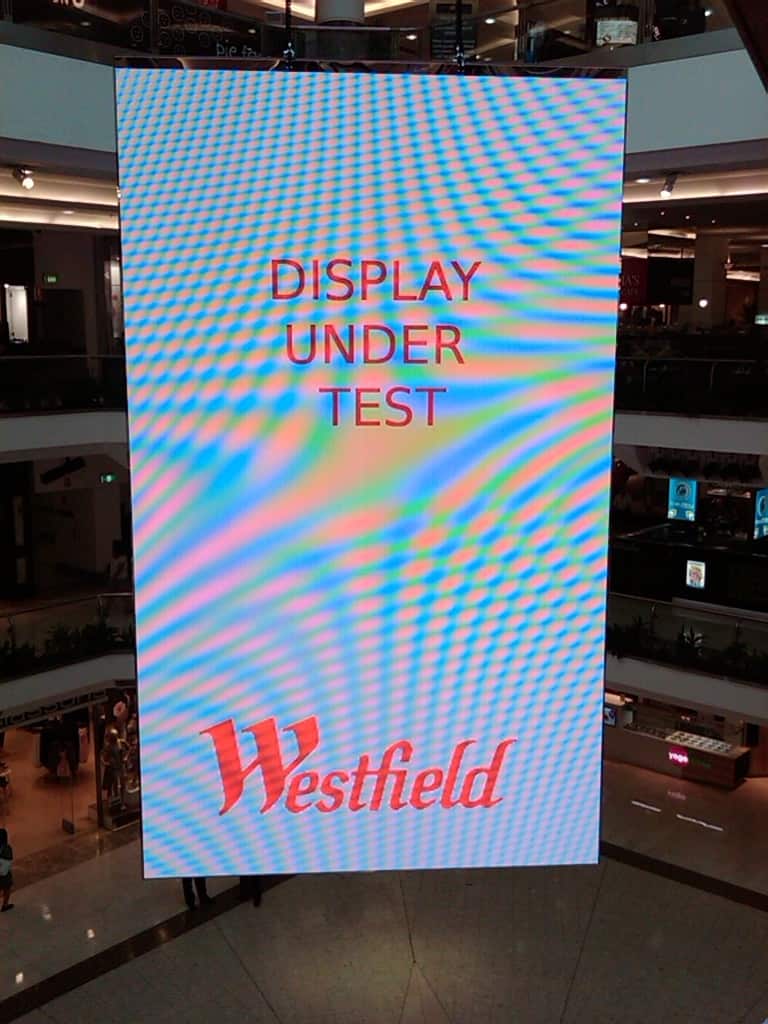
Parramatta Westfield LED Screen
In one of our previous blogs http://www.digitalsignageblog.com/2009/11/24/shopping-centres-battle-of-the-big-screens/, we talked about the largest screens in shopping centres and apparently we saw another one the other day in the Parramatta Westfields centre. continue reading »
Category: Digital Signage Blog News
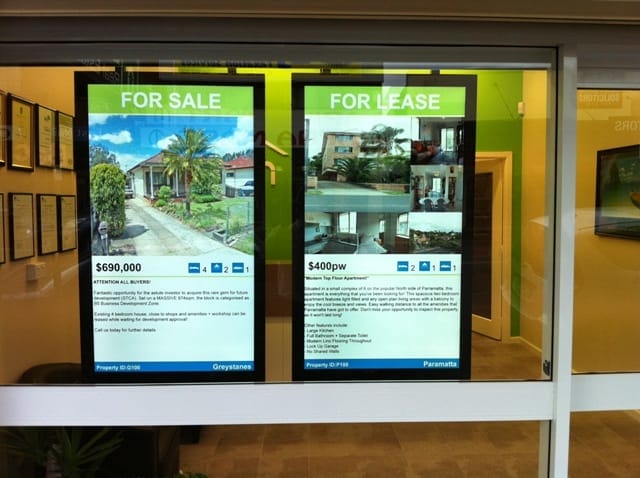
Digital Signage Klips: Advertise Me snaps for 2010
At the end of last year we asked our readers (http://www.digitalsignageblog.com/2009/12/04/klips-share-your-digital-signage-snap/) to send us digital signage Klips so we can share with the rest of the world. We decided to kick off the year with our own Klips that we’ve taken whilst being out and about. You can view these here http://tweetphoto.com/user/advertisemeAU and make sure you follow us in twitter (http://www.twitter.com/advertisemeAU) so you can receive our latest updates. Let’s review some of these digital signage Klips and implementations:
Category: Digital Signage Klips
Digital Signage Marketing 101 – Pleasure and Pain
digital signage is one of the fastest growing digital mediums to help businesses market and advertise their products and services. For those who have been in the industry already know what I’m talking about. Just recently, a friend of mine shared some basic 101 marketing information which I found very useful and thought I’d “pay it forward” and share this with everyone. Basically, he heard this from one of Anthony Robbin’s seminars about associating advertisements with Pain and Pleasure. From what I could understand from his explanation it went something like this:
- We tend to avoid pain but we are attracted to pleasure.
- Use pleasure and pain in advertisements as a call to action.
- There was an example given for a telephone company advertisement. This advertisement showed how a son hasn’t called his mother in a while (this is associating pain) and it showed a picture of the mother being quite sad. Obviously the son was feeling guilty and by simply calling his mother, it made her happier (this is associating pleasure).
When we develop our digital signage content, do we use this marketing strategy?
Here’s an inspirational quote from Anthony Robbins:
My definition of success is to live your life in a way that causes you to feel a ton of pleasure and very little pain – and because of your lifestyle, have the people around you feel a lot more pleasure than they do pain.
- Anthony Robbins
Category: Digital Signage Blog News
Advertise Me Interviews Concerto Digital Signage
| advertise me: | Hi Brian, thanks for joining us for this interview. We’re quite excited to speak to someone such as yourself about Open Source applications for digital signage. |
| Brian: | Thanks for interviewing me! We built Concerto as students at one of America’s great tech universities because it addressed an unmet need that we saw on our campus, and we didn’t expect when we initiated the project to see it become a topic of interest for people all over the world. |
| Advertise Me: | Let’s start with the basics – could you please explain what Open Source is, and is it really free? |
| Brian: | Sure. Open source software is free for anyone to obtain and use, as well as modify – provided that they make their modifications open-source as well. |
| Advertise Me: | Thank you for clearing that up. So let’s talk about your Open Source application for Digital Signage called Concerto. How did you come up with that name and what is it exactly? |
| Brian: | First things first: Concerto is a free digital signage platform for sharing flyers, alerts, and other messages with other people by showing them on flat panel televisions and other types of screens. It’s a broadcast medium that makes it simple to make a flyer and get it out to many people quickly, but it also allows screens to show a custom mix of messages based on predefined preferences.
The name Concerto pertains to this key function. A musical concerto emphasizes one musical instrument amidst an entire orchestra, and with our digital signage product, users can emphasize one type of message amidst an entire orchestra of different types of advertising. For example, at we launched Concerto at Rensselaer Polytechnic Institute (RPI for short). At RPI, the management school has a big screen with a special zone for graphical messages. With Concerto, they just specify the types of advertisements they want to highlight, and which types they wish to exclude. So messages about management lectures might be shuffled in more frequently than student entertainment flyers and sports notices. In this way, the management school can tailor their Concerto display for the audience they hope to attract without impacting how others on campus use Concerto. |
| Advertise Me: | Out of curiosity, how did the Concerto concept and idea start? |
| Brian: | We started Concerto with a purpose: to improve communication within our campus community. There were already ways to tell the RPI campus community about events and other happenings before Concerto: student groups, academic departments, or individuals could print out and tape up a lot of flyers, or even put their messages on the campus cable television system. It took a lot of time and money to print out and put up lots of paper signage. The cable television system was managed by a very small group of people who had many other responsibilities aside from approving messages for cable. More importantly, that system was designed with a bureaucratic, almost corporate mindset in mind, one meant to keep control of the network regulated to only the smallest group of elite users. So we designed Concerto from the ground up to be accessible to every computer user at our school. Now we have students, staff, and faculty working together to help maintain the network. It really gives people a reason to pay attention to Concerto – they become a part of campus communication, instead of just being forced to see it. |
| Advertise Me: | Why should someone use Concerto and what are some of the benefits? |
| Brian: | Members of any community where events and information are often overlooked should find Concerto’s unique design to be particularly attractive. We designed Concerto first for colleges and universities, but its benefits can extend to any community looking to spread and share messages about events and other activities.
Here are some core benefits of using Concerto:
|
| Advertise Me: | Since the application is free, are businesses permitted to resell this product to their clients? |
| Brian: | Under the terms of our license, the GNU Public License (v2), our software may be resold. But this distinction is key: no company can restrict the rights associated with a copy of Concerto by denying their users access to the source code. I’ll also add that if you make a modification to our source code, you must give back those changes to the larger community. Companies may provide for-pay support and consultation packages to get our software up and running for others, but the source code must always remain free to everyone.
|
| Advertise Me: | Can Concerto be classified as a Software as a Service (SaaS)? |
| Brian: | I guess it could be considered SaaS, but that’s not how we think most people will use it. We have our Concerto server software running on a powerful machine at RPI that serves out the content for all of the client machines across our Troy, New York campus. This server could theoretically be located somewhere off-campus, in which case every client unit would receive content over the Web. But for most administrators who wish to launch a Concerto network at a school, in a town, or elsewhere, it probably makes the most sense to locate that server somewhere nearby. I should also mention that most users of Concerto are everyday people who just want to find and share messages of interest – since they just visit Concerto in a Web browser and never see its nuts and bolts, it looks like a service that could be hosted many miles away from them. |
| Advertise Me: | Could you please briefly explain what would be involved (hardware & software) in setting up a digital signage solution using Concerto? |
| Brian: | Concerto is designed from the ground up to work perfectly with inexpensive, commodity hardware that anyone can purchase from websites such as Newegg.com. There’s a central server, as I already described, which is simply a computer that stores content and distributes it to each Concerto screen. The first step to deploy Concerto is to download our software at http://www.concerto-signage.com and install it on the computer that will act as the content server.
Once that’s set up, you’ll need some other computers to drive the different displays on your fledgling Concerto network. The system requirements for these units are much lower – we’ve been successful with $500 small form factor computers that have 2 GB of RAM, Intel Celeron M CPU, Ethernet connection, CompactFlash card, and DVI connection that can then be adapted for HDMI output to flat panel televisions. These client units use the Concerto player software, which can be run as a live CD or installed directly to a storage device such as a hard drive or memory card. They must be able to connect to your network and receive power. For more information about how to deploy Concerto, please see the page at http://www.concerto-signage.com/view/deploy. |
| Advertise Me: | How long has it taken to develop the Concerto framework and application? |
| Brian: | We started to develop Concerto in October 2007, and launched it in March of 2008. We were all students at the time in our undergraduate studies at RPI. Since our RPI launch in March 2008, we’ve updated the core software over ten times, adding new features and addressing bugs in response to feedback from our more than 1,000 RPI-based users. |
| Advertise Me: | What makes Concerto so different from all the other Open Source applications in the market? |
| Brian: | Concerto first sets itself apart from many more traditional digital signage networks by being completely based on the World Wide Web. Older signage platforms were often based on coaxial cable lines. Concerto runs over standard Ethernet cable and wireless Internet, which makes it far more versatile for many places that now have more Internet jacks than coaxial hook-ups. More importantly, Concerto displays can show content that is completely specific to a location and/or audience. Finally, Concerto is designed from the ground up to encourage hundreds or potentially thousands of users to get involved in the process of sharing messages about events and other information. |
| Advertise Me: | What has been the most successful Concerto project thus far? |
| Brian: | Our first and most successful network is still at RPI, but we just released the source code under our public open source license in July, so we are also working with several groups from around America to launch Concerto in their own communities. While I can’t talk specifics yet, we’ve received inquiries from companies, libraries, and other universities. |
| Advertise Me: | Do you have any advice for people who are planning to start a business in the digital signage industry? |
| Brian: | I would suggest that the digital signage space is ready for some new ideas. Digital signage software has traditionally been proprietary and expensive. Concerto is a free alternative that provides, for the most part, the core digital signage package. In order for future companies to be successful in this space, I think they need to do more than continue to provide the same types of products and services that we can now give away for free. The bar needs to be raised, with offerings that provide an even greater value proposition than before. |
| Advertise Me: | Are there any plans to monetize Concerto? How are you guys going to make money, or is this a hidden secret? |
| Brian: | Concerto started as a volunteer project, and we decided early in the game that we would not attempt to monetize the software itself. We have no hidden agendas or secrets when it comes to that. While some of our team may consider becoming digital signage consultants in the future, we will never charge for the code. |
| Advertise Me: | This is our final question that we normally ask all of the people we interview. What do you see as the next “BIG THING” in digital signage? |
| Brian: | We have built a platform with Concerto to enable the core features and functionality of what I like to call a “twentieth century digital signage platform.” People can buy inexpensive commodity computer hardware, connect them to small or large monitors or television displays, and build a Web-based communication network in virtually any place where there’s easy access to an Internet connection. It’s a framework of functionality that nobody has to build anymore. Instead, they can focus on what they can add to Concerto to make digital signage more effective for new audiences. Nowadays, people are looking for new ways to interact with the information that’s being spread around the world. Social networking really put the focus back on the end user, and we feel that digital signage can be made more effective by providing more ways for users to interact with the advertising they see.
One of the ideas that we’re exploring with Concerto is how we can allow direct user interaction with digital signage. As the first and simplest way of enabling this kind of exchange, we’re adding pause and rewind buttons to our screens that will allow people to stop on specific messages and roll back to what they may have missed earlier. But what I think we’re really aiming to build is a full-blown kiosk mode that gives users new abilities to find out more about specific messages and other location-based information relevant to the Concerto display and its location. For example, let’s say that I’m looking at messages playing on a Concerto screen in the lobby of a hospital. When I move close to the screen, a web cam detects my presence and the display changes to show a smaller version of the same advertisements, as well as a building map and other hospital information. I think that a new and greater push for designing experiences that combine advertising with interaction can help us to create a new type of digital signage. |
| Advertise Me: | Brian, thanks for taking part in this interview and we hope to speak to you again in the near future. Good luck with the Concerto project and we wish you all the best. |
To read more interviews click here: http://www.digitalsignageblog.com/category/digital-signage-interview/
About Concerto:
Concerto is a free, Web-based broadcast medium for digital announcements that just works. Using Concerto, it’s easy to engage large communities of people with graphical and text-based flyers, alerts, and other messages. The open source project was initiated by undergraduate students at Rensselaer Polytechnic Institute in 2008. The code can be downloaded for free at http://www.concerto-signage.com. The Concerto Project is open to developers from around the world and aims to provide a free platform for digital signage today and in the future.

About Advertise Me:
Advertise Me is a privately owned Australian company specialising in all aspects of digital signage solutions.
Our team of highly skilled professionals is able to introduce innovative ways for businesses to communicate with their intended audiences for a variety of purposes including informing, educating, entertaining and selling.
You can expect us to:
- offer the most affordable and cost effective solutions tailored to your specific business needs.
- provide you with concise and accurate information and will ensure that you understand and are comfortable with our proposals.
- strive to make our clients happy and successful.
We have partnered with a number of key reputable organisations and will continue to build further partnerships to deliver the most effective solutions for our customers.
Visit our website at www.advertiseme.com.au for more information.
Category: Digital Signage Interview, Featured Post
Experience the digital signage world at the ABC Bondi Shop
digital signage At Its Best!!!
In the past two months advertise me has been busy providing the Australian Broadcasting Corporation (ABC) with an innovative digital signage solution for their new concept shop in Westfield’s Bondi Junction.
The new ABC shop opened its doors on 15 May 2009 with a fresh new look but more importantly it introduced digital signage.
The three main reasons for introducing digital signage to the ABC shop were:
- to draw additional customers into the store;
- to increase overall sales; and
- to showcase some of the other broadcasting services that the ABC provides e.g. ABC news, ABC TV, ABC radio and the ABC website.
Advertise Me understood the significance of what the ABC wanted to achieve and ensured that the digital signage solution that we provided was not only able to meet the requirements of the ABC but could also be easily adapted to other ABC shops.
The Digital Signage Solution
From a visual perspective this is what the Advertise Me’s digital signage solution looks like:
But to really understand how the digital signage solution was tailored to the ABC requirements is to understand the audio and content challenges faced in the integration of digital signage with ABC’s audio and visual equipment. This is because providing a digital signage solution is more than just connecting a PC to a display screen.
The Audio Challenge
The ABC required that the digital signage solution enable it to switch audio between songs, store announcements, advertisements, ABC radio and audio from live ABC news.
This meant that the Advertise Me’s audio solution would require the overhead speaker system to be connected to an audio switching tool that allowed the switching between the CD player, the digital signage player and the set top box.
The result was a digital signage solution that ensured that live ABC news, product videos, advertisements, announcements, music and much more was heard in the ABC shop.
The Content Challenge
The ABC required that the digital signage solution to easily manage content from one central location.
This meant that the Advertise Me’s content solution would require a dedicated Content Management Server to house the content and playlists.
The result was a digital signage solution that ensured that all content scheduling was performed at ABC’s head office with the use of a PC software tool to schedule the playlists in a calendar view so that staff could easily manage the content. The digital signage solution also ensured the ability to display live ABC TV, in store advertisements, RSS news and products by using zoning.
In addition, the digital signage solution enabled the ABC marketing staff to update content, schedule items to display on the screens and manage the overall solution from one central location without having to physically be onsite.
Results
Advertise Me’s digital signage solution met the ABC’s technical requirements and has already resulted in an increase in the number of customers walking into the store and an increase in overall sales.
Category: Digital Signage Blog Events, Digital Signage Blog News, Digital Signage Case Study
Digital Signage is everywhere
We’ve been pretty busy working on a project and slacked off in posting blog entries. We’ll hopefully post information about the project that we are working on at a later stage but we thought we’d mention how digital signage is everywhere. We recently walked in the busy streets of Bondi junction Australia and noticed how common it was for businesses to have display screens in their stores. The majority of these shop were displaying content from a DVD player, or showing live TV whilst others were actually displaying in house advertisements.
One thing that I noticed was that even thought Mothers day was approaching, not many businesses had any relevant messages relating to this event. Even today, being mothers day, businesses were not using digital signage to their advantage. Oh well maybe its just Australia… My thinking is that maybe one day, businesses will be educated and skilled in the digital signage technology to update and stay connected with their audience.
Category: Digital Signage Blog Info
Digital Signage Featured Links
Recent Posts
Featured Posts
- Product Review: Synrax Onyx Mini
- Introducing digitalsignagearticles.com
- Experience the digital signage world at the ABC Bondi Shop
- Will the Microsoft Xbox 360 take over the Digital Signage Industry?
- Subscribe to the digital signage blog
- Want to be featured on the digital signage portal newsletter?
- About Advertise Me
- Klips: Share your digital signage snap!
Most Viewed Posts
- Forum Post: World Wide Digital Signage Network - 8,579 views
- Digital Signage Portal Forum Post: CISCO Film Making Competition - 5,707 views
- Digital Signage Portal Forum Entry: Help with digital signage business plan - 5,545 views
- How can the stimulus package help your businesses? - 4,293 views
- Points to consider for a Digital Signage Business Plan - 3,564 views
Recent Comments:
- Digital Signage Klips: Outdoor Screen (3)
- DigitalSignageBlog: Thanks. Please send it to info@digitalsignageblog.com I’m interested to see what you have.
- resus digital signage: Love the clips, i have some good digital signage clips i will find out and send to the site,...
- Weekend Fun: Digital Signage and the Audi A4 Convertible (4)
- DigitalSignageBlog: Yes that’s correct.
- Tom: are you talking about ads on the vehicle LCD screen?
- Techie Question: Using a DVI to VGA convertor with a VGA CAT5E or CAT6 extenders, does this work? (3)
- dsreklama.ru: Shure it will) As for extender,absolutley never mind how the signal get to VGA, if it VGA it will work...
Popular Tags used in our posts
advertise advertise me Advertisements advertising australia blackberry blog Caption case study Digital Id digital signage digital signage blog digital signage network digital signage player email Fun Google iphone klip led screen microsoft mobile phones nec newsletter Poll Id portal portal forum screens Signage Industry Signage Solution
Digital Signage Blog Categories
- Digital Signage Blog Events (25)
- Digital Signage Blog Info (112)
- Digital Signage Blog News (135)
- Digital Signage Blog Products (24)
- Digital Signage Blog Video (10)
- Digital Signage Case Study (5)
- Digital Signage Ideas (3)
- Digital Signage Interview (7)
- Digital Signage Klips (10)
- Digital Signage Newsletter (7)
- Digital Signage Polls (12)
- Digital Signage Reviews (5)
- Digital Signage Techie (14)
- Digital Signage Weekend Fun (18)
- Featured Post (31)